Hello dear community!
PdGo versions 0.9.0, 0.9.1, 0.10.0 are released!
Here is a quick changelog for each release.
Added the official Go language tutorial - A Tour of Go - adapted to run on Playdate with PdGo, out of the box, on both the Simulator and the device.
If you are coming from C or Lua gamedev and want to learn Go, this is the fastest way to try every language feature hands-on: packages, functions, control flow, pointers, structs, arrays, slices, maps, closures, methods, interfaces, type assertions, generics, errors, and io.Reader - all running directly on Playdate hardware.
All examples are located in the tour_of_go/ directory. Each example is a self-contained PdGo project with its own build.sh.
The examples cover Go fundamentals (01-26), pointers and structs (27-32), slices (33-41), maps (44-47), functions and closures (48-49), methods (50-57), interfaces (58-62), type assertions and switches (64-65), Stringer (66), errors (67), io.Reader (68), and generics (generics_type_parameters, generics_generic_types, generics_all).
All examples are device-tested and avoid known TinyGo ARM fmt issues.
add ARM unwind/libc stubs to pd_cgo.c - TinyGo links libgcc when ‘error’ interface is used as return type, which references OS symbols (__exidx_start/end, _exit, _kill, _getpid) that don’t exist on bare-metal Playdate.
Build System
- Split install.sh into two installation modes - curl (remote) and local - for more flexible setup.
- Extracted TinyGo patches to standalone source files (cmd/pdgoc/tinygo-patches/), replacing inline heredocs in install.sh
with files downloaded from GitHub during installation.
- Refactored build_script.go - now copies existing playdate.ld (linker script) from TinyGo installation directory and merges the existing playdate.json file with per-build-specific flags.
- Added dependency download step in install.sh before building pdgoc.
Branding
Other
- Fixed empty metadata (version, commit, date) for pdgoc build.
- Updated README with new installation modes info and GC-related text consistency fixes
API Bindings:
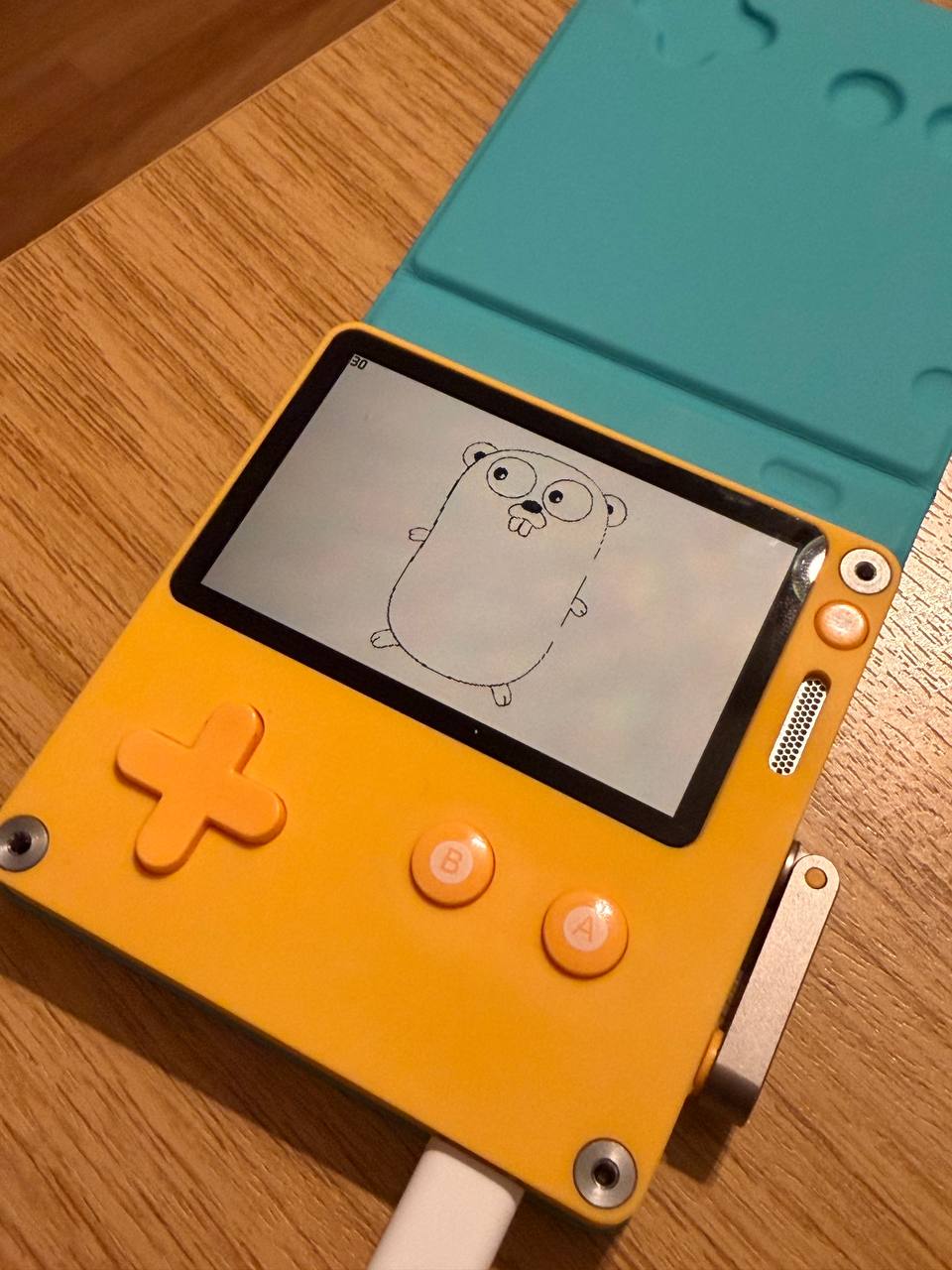
 This conversation was on the Slack.
 Bug Fixes
 New Features
 Docs Cleanup

 First, we’ve been actively developing Windows support
  . Soon, PdGo will be available to users on that platform as well. In parallel, we’re building a garbage collector. As you know, C has no GC - you allocate, you free, you become the garbage collector. Lua does have one, but its periodic collection can introduce frame stutters on Playdate. PdGo currently operates closer to the C model: TinyGo’s GC is set to “leaking,” meaning heap allocations from both Go and the Playdate C API are not reclaimed unless freed manually.
 This is not where we want to stay. We are developing a conservative mark-and-sweep GC tailored to Playdate’s constraints
  . It tracks Go-level objects conservatively and integrates with the SDK allocator, while also using a finalizer pattern to automatically release C-level API objects (such as bitmaps, sprites, and sounds) once they become unreachable. This allows us to manage both heaps within a unified system. The design also introduces lightweight stop-the-world pauses, significantly lighter than Go’s standard tri-color GC, making it suitable for constrained hardware environments.