.Breeze v2 is a pretty big step forward.
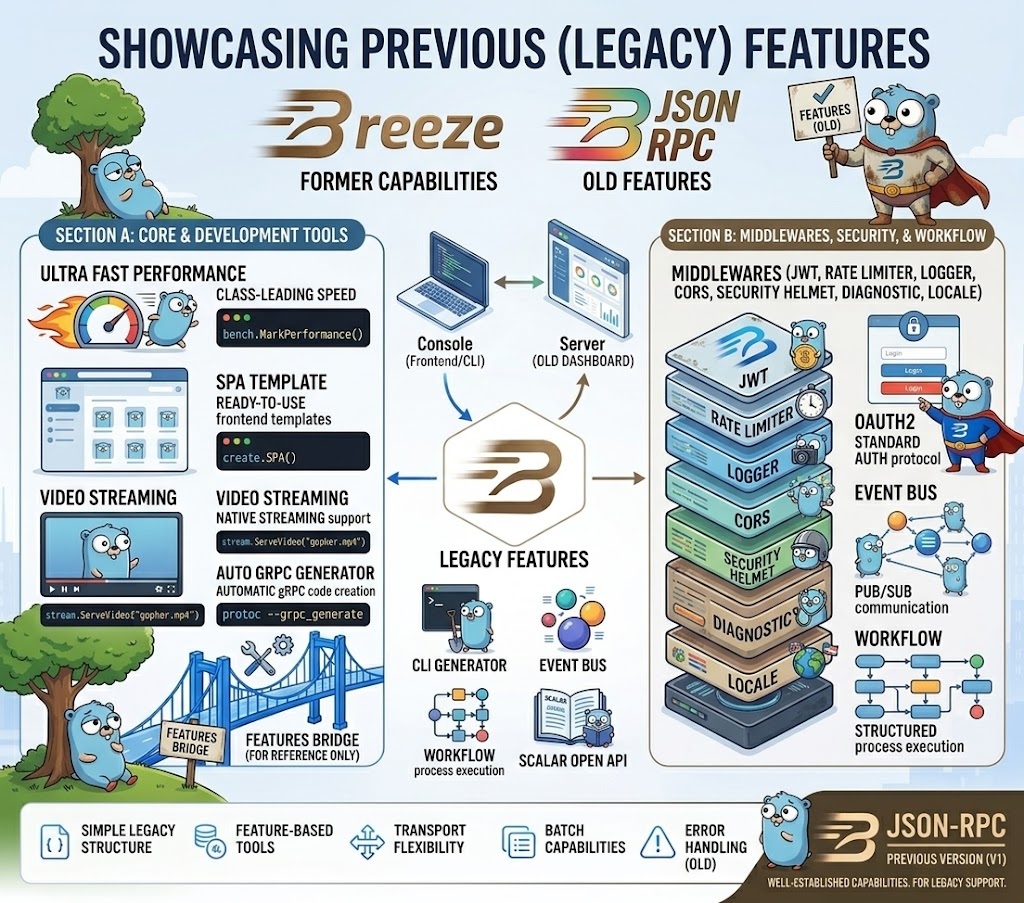
Breeze started as a Go web framework, but with v2 I’m pushing it toward something broader: a Go-native runtime with built-in developer tooling, observability and AI integration.
The three biggest additions in this release are Fleet, MCP and JSON-RPC.
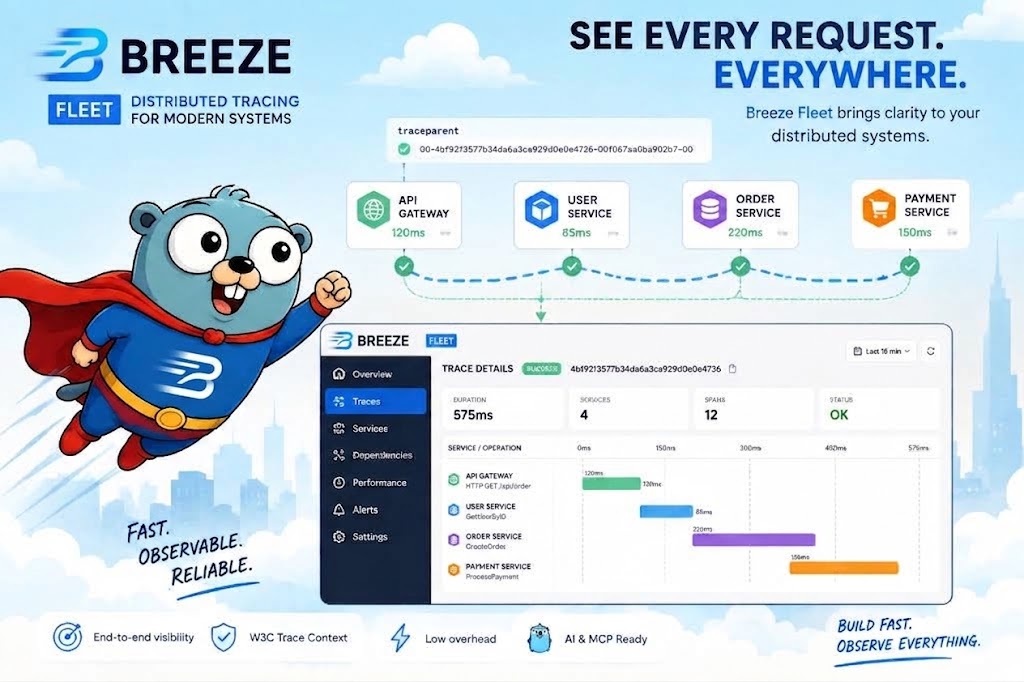
Fleet
Distributed systems are easy to build.
Understanding what happened to a request across multiple services is the hard part.
Breeze Fleet adds distributed tracing with W3C traceparent, allowing trace context to travel across services and giving you a way to follow a request through the system.
The interesting part is that Fleet isn’t completely isolated from the rest of Breeze.
It can be inspected through the MCP tooling as well.
MCP
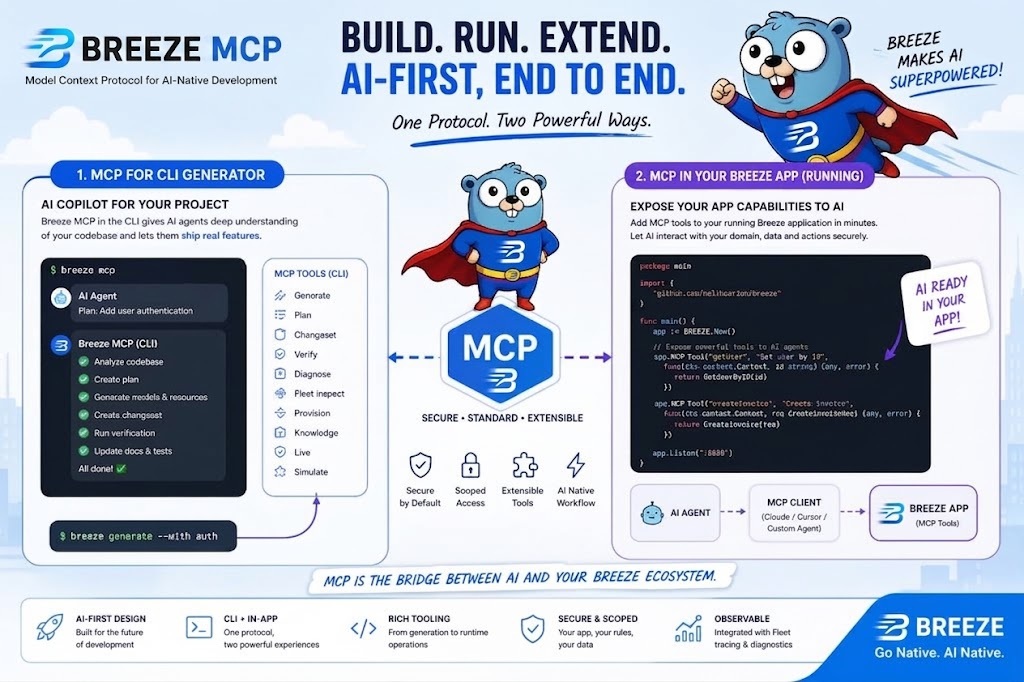
MCP is probably the biggest architectural addition in v2.
Breeze supports MCP at two different levels.
The first is the CLI / generator side.
An AI agent can interact with the Breeze development environment through MCP to understand a project, generate code, create plans and changesets, verify changes, diagnose problems, inspect Fleet and more.
The second is in-app MCP.
A running Breeze application can expose its own capabilities as MCP tools:
app.MCPTool("getUser", "Get a user by ID", handler)
This means MCP isn’t only a development-time feature.
Your actual application can become something an AI agent can discover and interact with.
That’s a very different model from simply putting an AI chatbot on top of an API.
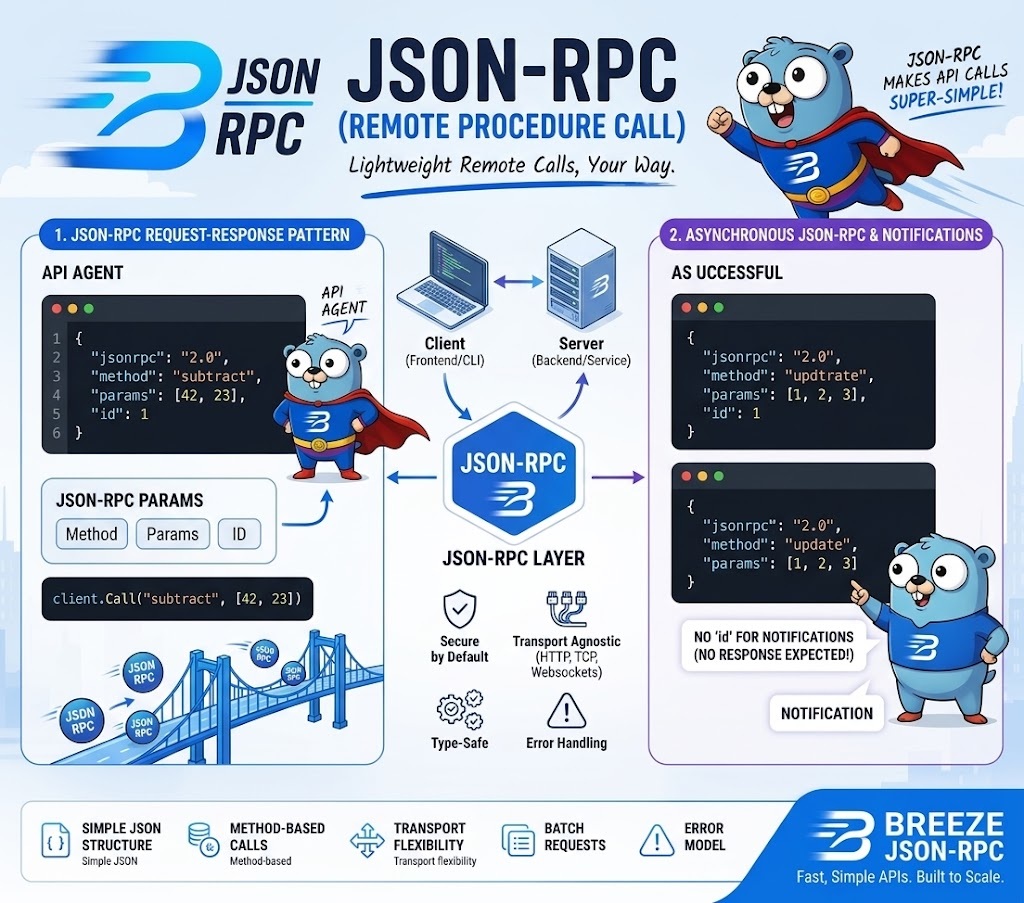
JSON-RPC 2.0
Underneath the MCP layer, Breeze v2 also introduces a proper JSON-RPC 2.0 implementation.
It includes:
-
request/response dispatching
-
framing
-
stdio transport
-
context propagation
-
diagnostics
-
registry-based method handling
-
tests and benchmarks
This gives Breeze a protocol layer that can be used independently of MCP.
Putting it together
The interesting thing isn’t really any one of these features.
It’s how they connect:
                 AI Agent
                    │
                   MCP
              ┌─────┴─────┐
              │           │
        CLI / Generator   Running App
              │           │
              └─────┬─────┘
                    │
                JSON-RPC
                    │
                  Breeze
                    │
              ┌─────┴─────┐
              │           │
           Workflows    Events
              │           │
              └─────┬─────┘
                    │
                  Fleet
                    │
          Distributed Tracing
The goal with v2 is not to bolt AI onto a traditional web framework.
I’m trying to make the runtime, developer tooling, protocols, observability and AI integration part of the same Go ecosystem.
Breeze v2 is still evolving, but this is the direction.
Go Native. AI Native.
GitHub: GitHub - nelthaarion/breeze: Breeze — High-Performance Golang Web Framework · GitHub
#Golang #Go #MCP #JSONRPC #DistributedSystems #Observability #OpenSource #DevTools #Backend